
Searching Washington Parish Civil Dockets
For online access, the Washington Parish Clerk offers Cott eSearch, a paid subscription service that serves as the main index and image route for civil records. You will need an account. Before logging in, the screen shows only User ID and password fields, so a free guest search with name, docket-number, party, date, or document-type filters is simply not part of the setup.
Bring the strongest details you have. The Clerk's judgment-request materials list a docket number, division, caption, filing date, and deputy clerk as useful fields, and a motion or hearing request should add the approximate date and document type. When an online result is unclear, or the record is an older one, call the Clerk at 985-839-4663, visit the Franklinton counter at 908-B Washington Street, use the mail, or send a written request to the Custodian of Records.
- Identify the record type, such as general civil, family, probate, protective order, or judgment.
- Gather the docket number, division, caption, approximate filing date, and requested document.
- Use a paid Cott eSearch account for available civil index entries and images.
- Check the court calendar only to locate the setting, then confirm the underlying case with the Clerk.
- Ask for a plain or certified copy when the record itself, rather than a calendar entry, is required.
Washington Parish Civil Image Dates
Civil images in Cott eSearch run from September 1, 2006 through current. Indexing and release timing can lag. That date marks the edge of the portal's image library. It says nothing about older civil files at the Clerk's office. Plenty of paper and older records exist beyond the subscription view. A person chasing one of those may need direct help from the staff. The portal's own terms also caution that items can be incomplete, unverified, or not yet released.
Filing and searching are two different errands at the Washington Parish Clerk's office. The Clerk's online-services information lays out the split. New civil papers go in by e-file or walk-in. CottFile handles the e-filing side. Cott eSearch, by contrast, is the paid route for pulling up existing court records. Keep that difference in mind when the goal is a docket search rather than a fresh filing.
The Clerk's civil filing and online-services notice lists the filing routes the office accepts.
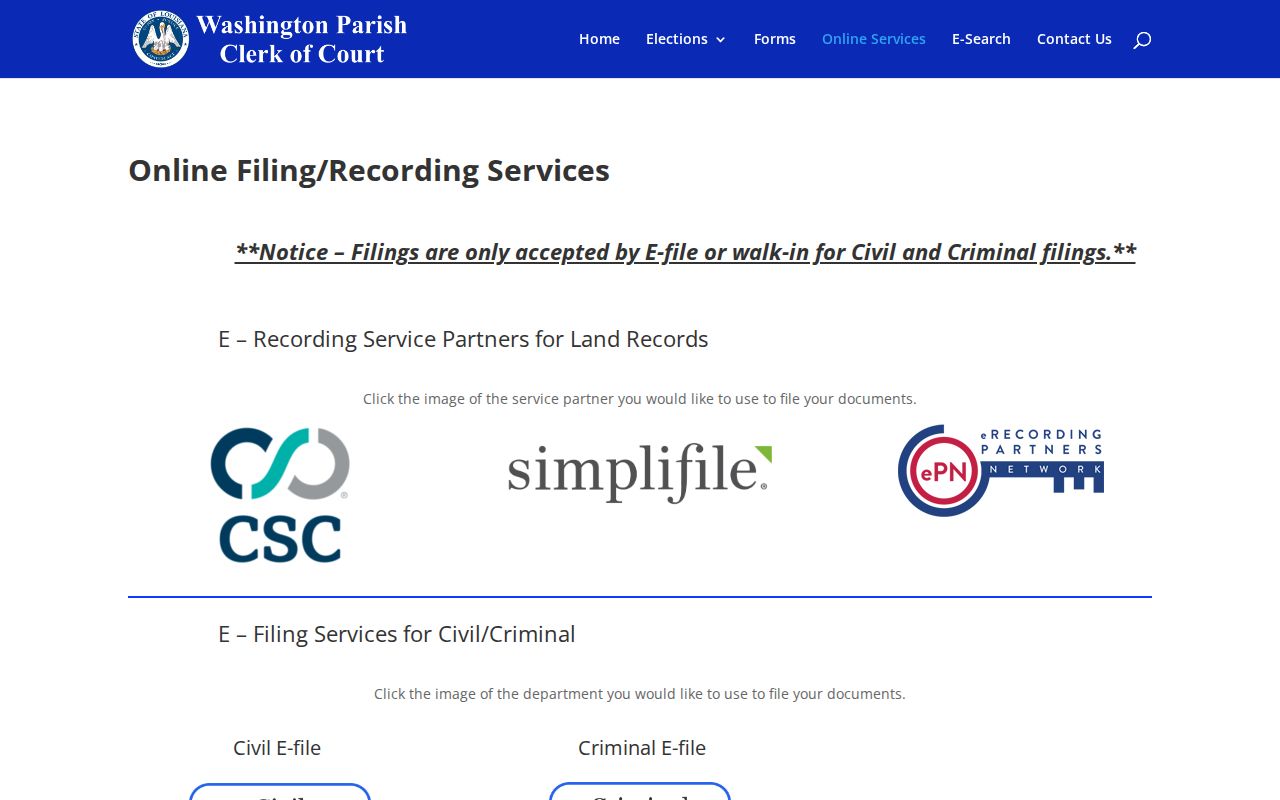
The notice keeps CottFile, the submission route, clearly separate from Cott eSearch, the record-search route.
Inside a Washington Parish Civil Docket
A civil docket is the event log for a case. Entries open to the public may show the docket number, division, caption, filing date, documents filed, motions, hearing settings, orders, judgments, and appeal activity. It is not the whole file. A calendar session can tell you that motions or pretrials are scheduled, but the Clerk's docket and the filed order are what show what actually happened in a Washington Parish case.
A docket number and division pay off when the caption is common or several related civil filings exist. If you need a final judgment, say whether you want a certified copy. One more caution: a public index line does not guarantee that every attachment is open or viewable as an image.
| Docket number | The case identifier used to locate the civil record with the Clerk. |
|---|---|
| Division | The assigned general or family division, which helps route the inquiry. |
| Caption | The case title shown on the filing or judgment request. |
| Filed date | The filing date that helps distinguish records and narrow a document request. |
| Setting or order | A scheduled event or filed ruling; a setting alone is not a final judgment. |
Washington Parish Civil Case Routes
Civil cases in Washington Parish are heard by the 22nd Judicial District Court of Louisiana, whose general divisions A through J handle civil and criminal work. Family matters go to Divisions K and L under local rules. Knowing the case type first helps. It keeps you from requesting a general civil docket when the file is actually family, probate, or protective-order material sitting in a different division with different access conditions.
| Request type | Likely court route | Useful starting detail |
|---|---|---|
| General civil suit | 22nd JDC general divisions A through J | Docket number, caption, division, filing date |
| Family matter | 22nd JDC family divisions K and L | Division and hearing date, with awareness of restricted exhibits |
| Probate or succession | Clerk civil and domestic record services | Decedent or case caption, docket number, and document sought |
| Protective-order matter | District-court case record, subject to protection and confidentiality rules | Case number and a focused request to the Clerk |
The Clerk's forms page groups civil and domestic forms together. Those groupings help a requester describe the record type accurately.
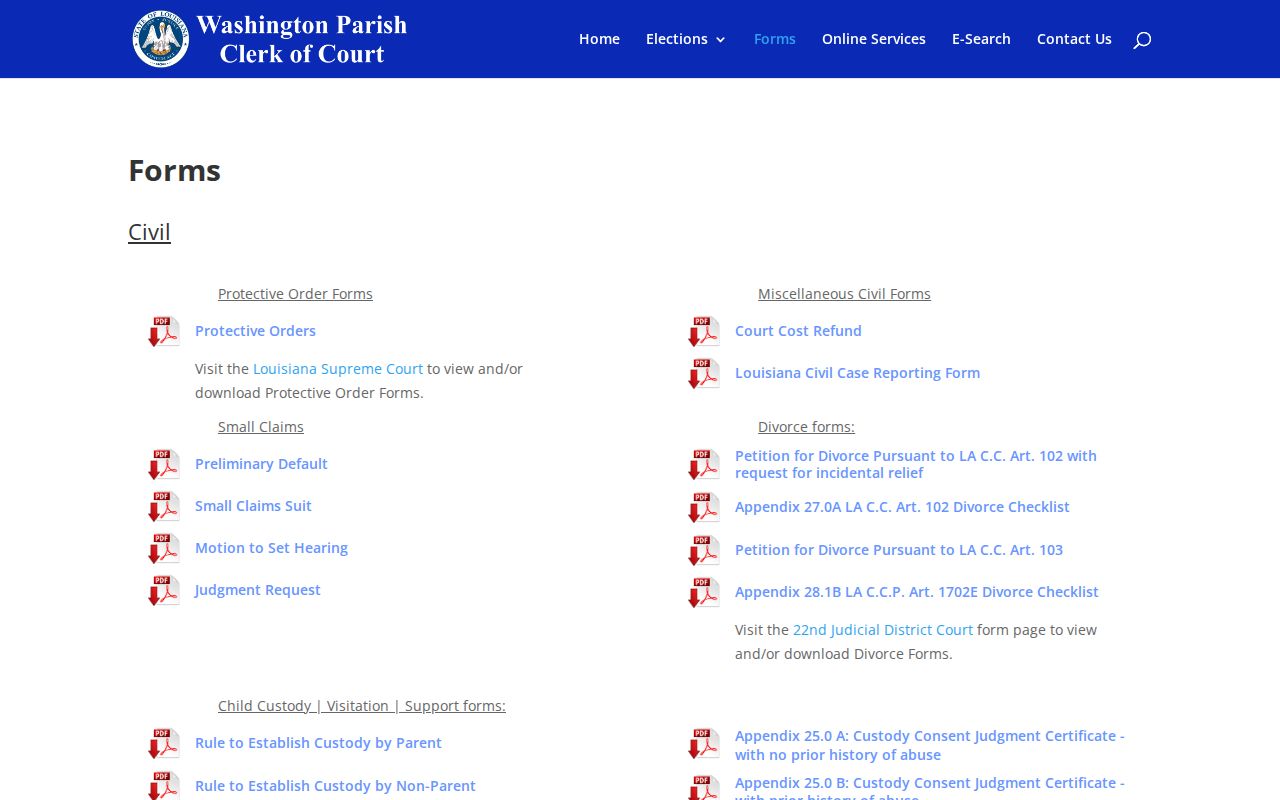
The official form categories show why a Washington Parish civil docket search works better with a clear record type. A broad request alone will not do the job.
Civil Case Types on the Docket
Civil and domestic work at the Clerk's office reaches well beyond contract and tort disputes. Public case categories include petitions, divorce, custody and support, nonsupport, rules to show cause, name changes, commitments, partition, successions, probate, tutorships, small claims or clerk's suits, judgments, and appeals. Some categories carry confidential portions or restricted filings. That is especially true where minors, personal financial data, or protective matters are involved.
- General civil filings, motions, orders, and judgments.
- Domestic matters such as divorce, custody, support, and paternity.
- Probate, successions, tutorships, and related court filings.
- Protective-order and commitment records that may have special access limits.
- Small claims, clerk’s suits, and appeal-related civil materials.
Naming the category does not decide whether a record is open. It simply gives the Clerk the context to find the right docket and explain any document-level restriction.
Washington Parish Civil Setting Codes
The 22nd JDC calendar uses Washington labels such as WP-CIVIL, WP-REV, and WP-MOTIONS, along with civil pretrials and trial weeks. A code marks a calendar block and nothing more. It does not establish that a final order was entered, that every case in the block was heard, or that the case has concluded.
- WP-CIVIL
- A Washington Parish civil session label that identifies a scheduled court block.
- WP-MOTIONS
- A setting for motion activity; check the filed order or docket to learn the result.
- WP-REV
- A review setting, which does not automatically mean a final judgment or dismissal.
Family hearing procedures vary by division as well. The Judge Amacker information posts division-specific hearing and exhibit directions, which a party should check against current orders in their own matter.
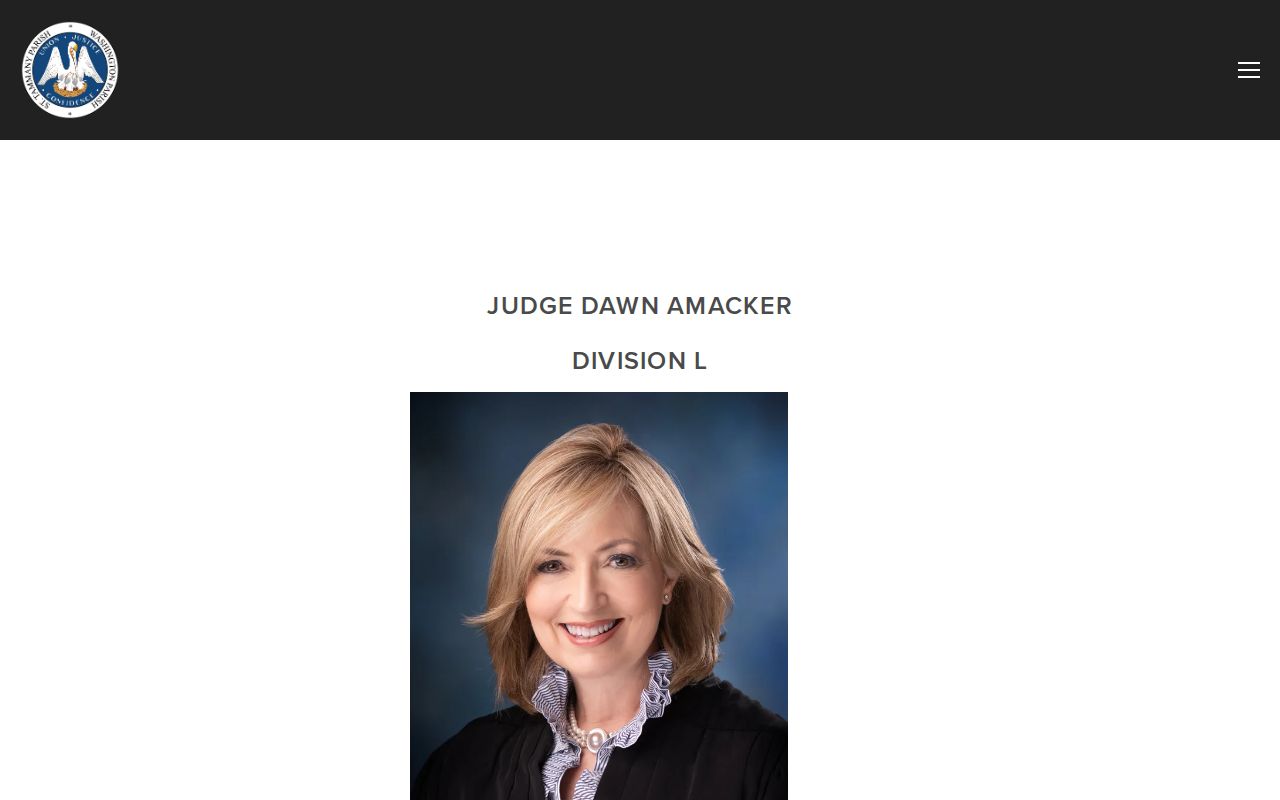
Division-specific instructions are a useful reminder here. A calendar date and a complete civil case record answer two different questions.
Civil Docket Settings and Hearings
Not every civil setting on the 22nd JDC calendar is a trial. A motions date covers pending requests. Review settings and pretrial entries mostly deal with how the case is being managed before any final judgment. The calendar does show bench-trial weeks and jury-trial weeks alongside civil motions and civil pretrials. The court itself says day-specific docket information is not posted online. Treat a listed date as a lead. Then confirm the docket or call the Clerk or the relevant division.
Keep two records straight when reading a Washington Parish court docket. A calendar entry shows what the court planned to hear. The docket shows what was actually filed. When you need the legal result itself, ask for the order or a certified judgment rather than relying on either one.
Washington Parish Civil Filing Context
How busy is the Washington Parish civil docket? The Louisiana Supreme Court’s 2025 annual report gives a sense of scale. Washington Parish saw 1,488 civil filings in 2025, up from 1,416 in 2024. The table shows no civil jury trials for 2025. It also lists an average of 284 days from filing to disposition across all cases. Those are workload numbers, not a schedule for your case. Still, they explain something practical. A civil case can sit through several motions and settings before any final entry appears. Length is normal, not a red flag.
Even a long list of docket events stays silent on the reasons behind them. It cannot tell you why a case shifted course or whether an order still holds. Pair the current docket with the actual filed document before drawing any conclusion.
Civil Docket Access Rules
Access to court records in Louisiana rests on statute. The statute does not promise every page appears online. La. R.S. 44:1 sets out what counts as a public record. La. R.S. 44:31 covers the right to inspect and copy those records. For court files specifically, La. C.C.P. art. 251 names the Clerk as custodian. Even so, parts of a file can be closed off. Court orders and confidentiality laws allow that.
A civil case lookup may return an index line. A sensitive exhibit may stay unavailable. So may financial detail, personal data, or material involving a minor. When an entry shows no image, ask the Clerk. The item might be restricted or unindexed. It could sit outside the online image range. A different request might reach it. Never guess at the contents of an attachment you cannot open.
Public index, limited image. A public docket entry does not make every document in the case open. The Clerk can identify the lawful route for a particular document and whether a court order affects access.
Washington Parish Civil Request Path
If a civil matter fails to turn up online, tighten the request. Do not widen it. Give the Clerk the docket number, division, caption, filing year or date range. Add the specific item wanted. Say whether a plain or certified copy is required. The posted fee schedule lists $1 per ordinary page. Certification adds $10 on top of the per-page fee. Research or preparation costs $15, plus actual postage. Confirm the current total before sending payment.
The 22nd JDC’s orders and forms page helps with identifying document types and court procedures. Keep in mind, though, that the Clerk holds the district-court file itself. A written request addressed to the Custodian of Records, with contact details included, works when clarification is needed.
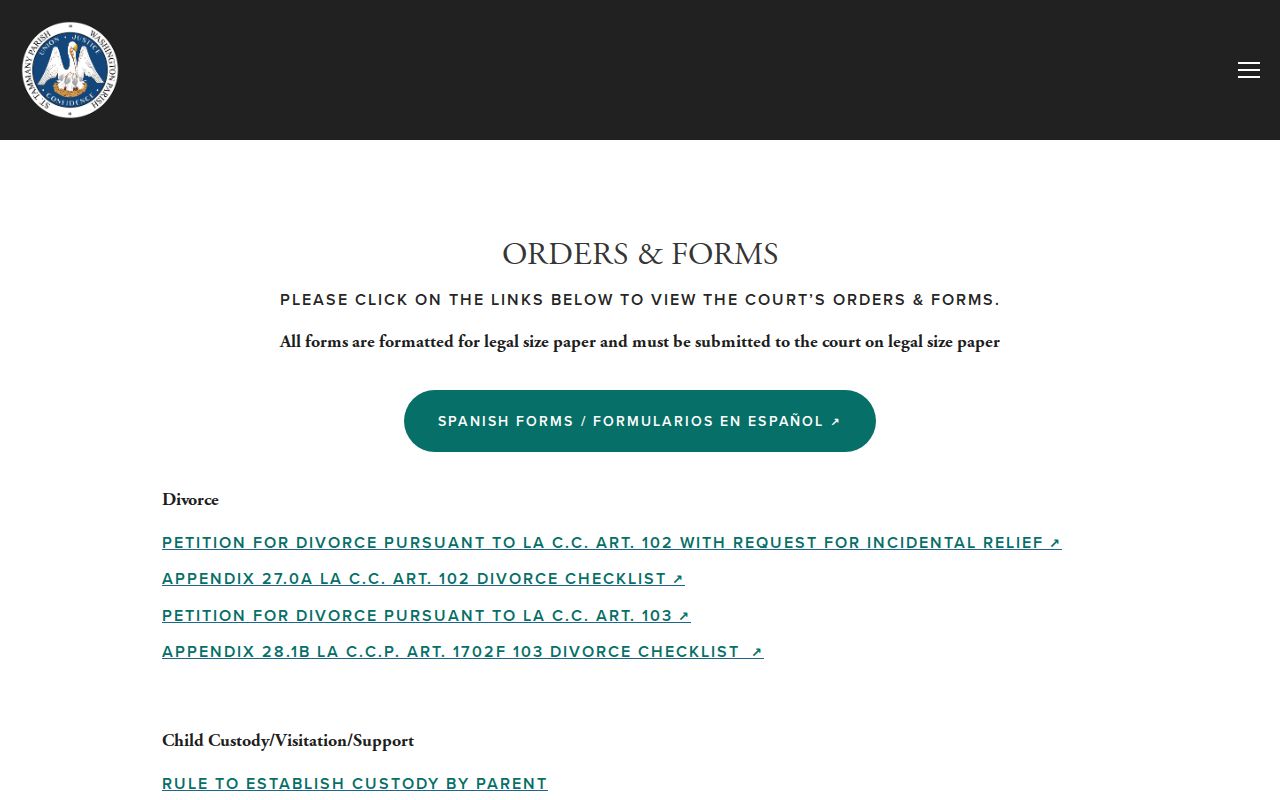
Need the right name for a civil filing? The official court forms spell that out. The Clerk of Court for Washington Parish runs the record channel that handles docket and copy requests.
Washington Parish Clerk of Court
908-B Washington Street, Franklinton, LA 70438
985-839-4663
Ask for the civil or domestic record route and provide the docket number, division, caption, and document request.